

Steel Tube Design & Engineering
Fraser Steel’s design and engineering team works alongside OEMs to turn concepts into production-ready tubular components. We focus on designs that hold tolerance, assemble cleanly, and scale without surprises. Whether you are refining an existing part or starting with a clean sheet, our engineers are thinking about how it gets built long before the first tube is cut.
We design for the most advanced equipment in the industry, including North America’s largest fleet of 3D tube lasers, capable of consolidating up to six fabrication steps into a single continuous process.
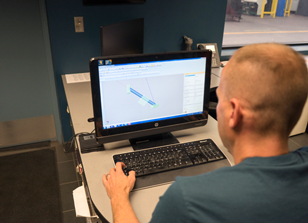
Preventing Manufacturing Issues Through Design
Successful programs start with practical design choices. Using standard bend tooling instead of unnecessary custom radius callouts simplifies engineering, reduces cost, and shortens time to market. Specifying material thicknesses that support the bend geometry improves repeatability and reduces fracturing or cracking. These early decisions make it easier to build parts that hold tolerance and work cleanly in production.
Our engineers work backward from the finished assembly. We analyze load paths, bend feasibility, and fixture strategies before locking in the geometry. The goal is simple: Part 200,000 should be just as accurate as Part 1.
Technical Standards
- ISO 9001:2015 Certified: A foundation of documented quality and continuous improvement.
- Tier 1 Readiness: Fully equipped to manage PPAP (Production Part Approval Process) levels 1 through 5, ensuring every part meets your exact specifications before full-scale launch.
- Launch Risk Mitigation: We utilize FMEA (Failure Mode and Effects Analysis) to identify and design out potential manufacturing failures before a single tube is cut.
- 200,000+ Parts Daily: High-volume output backed by rigorous statistical process controls.
Engineering That Adds Value
Efficiency isn’t about making things cheaper, it’s about stripping out waste while protecting the integrity of the part. We help customers simplify part counts, reduce weld times, and optimize material yields. Small tweaks in geometry can often eliminate the need for expensive fixtures or unlock faster automation.
- DFM/DFA: Design for manufacturability and assembly
- Feasibility: Tube bend limits and tolerance stack-up analysis
- Strategy: Custom weld fixturing and robotic access planning
- Optimization: Material thickness and part consolidation
- CAD Support: Production-ready models and revision control
Industries We Serve
Fraser Steel’s willingness to adapt to meet the ever-changing needs of a variety of industries makes it the go-to supplier of world-class quality products and services.
Tubular Design & Engineering FAQs
Do you offer full product design or manufacturing-focused engineering support?
Our primary focus is manufacturing-focused engineering. We support part and assembly design with an emphasis on manufacturability, structural performance, and scalability. That includes refining existing designs, optimizing geometry, and preparing parts for high-volume production rather than consumer-facing industrial design.
When should we involve Fraser Steel’s engineering team?
The earlier, the better. Involving our engineers during concept or early CAD stages allows us to influence bend geometry, weld strategy, tolerances, and material selection before designs get locked. Early input often prevents costly redesigns once production begins.
What CAD formats and tools do you work with?
We commonly work in SolidWorks and can support most standard OEM CAD formats. Our engineering models are developed with direct input from production teams to ensure designs translate cleanly to cutting, bending, welding, and assembly.
Can you help reduce part cost without sacrificing performance?
Yes. Value engineering is a core part of our process. We look for opportunities to reduce weld time, consolidate parts, simplify fixtures, and optimize material usage while maintaining structural integrity, alignment, and durability.
Do you support prototyping and pre-production builds?
Yes. We support prototyping and pilot builds to validate fit, function, and manufacturability before full production launch. This helps surface issues early and reduces risk during ramp-up.
Can you redesign an existing part to improve manufacturability?
We do this every day. Many companies come to us with parts that technically work but are inefficient to produce. Small changes to geometry, weld placement, or material selection can significantly improve throughput and consistency.
What types of components do you typically engineer?
We specialize in tubular and welded structural components, including frames, chassis elements, bases, and assemblies used in lawn and garden equipment, powersports, agricultural equipment, automotive systems, and industrial products where strength and alignment matter.