
OEM Chassis & Frame System Manufacturing
Fraser Steel builds chassis and frame systems that are engineered for repeatability, manufacturability, and scale. From early design collaboration through high-volume production, we treat the chassis as a complete working structure. The goal is simple: frames that assemble cleanly, hold alignment, easily scale, and last the test of time.
Structural Frame Systems for the Real-World
We specialize in structural frames for the stuff that takes a beating: lawn and garden, powersports, ag equipment, and industrial bases. If your product has to survive constant vibration and heavy loading without cracking a weld, you’re in the right place.
Designed for Manufacturability from the Start
Many chassis programs struggle not because the design is wrong, but because it was never meant to be manufactured at volume.
Our engineers work directly with your team to simplify frame layouts, reduce part counts, and remove unnecessary welds. We look at the specific manufacturing nuances that impact your bottom line:
- Optimizing Bend Orientation: We evaluate the “Hard Way” vs. the “Easy Way.” While bending on the strong axis (the hard way) offers maximum rigidity, switching to the “easy way” where possible can significantly increase throughput and lower costs without sacrificing performance.
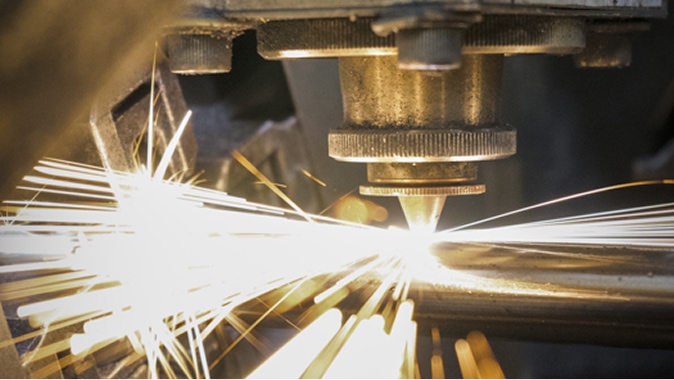
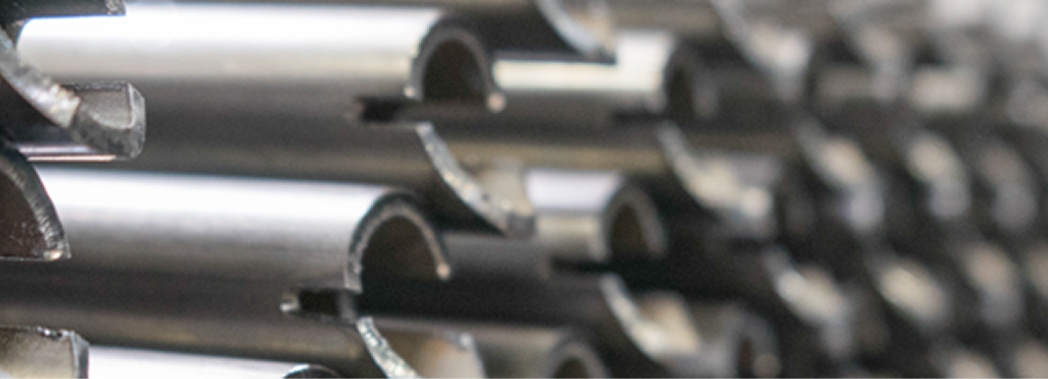
- Laser-Ready Geometry: We help normalize joint geometry for “normal-to-surface” laser cuts. By aligning CAD models with how a laser actually behaves, we ensure tighter fit-ups and better weld penetration (crucial for robotic welding consistency).
- Fixture-First Thinking: We design joint geometries that work with automation and fixturing instead of fighting them.
The Payoff: Lower cost per unit, tighter variation across production runs, and far fewer surprises when your program moves from prototype to full-scale ramp-up.
Partner with Fraser Steel to engineer high-volume, structural chassis systems designed for maximum repeatability and long-term durability.
Built for Consistency at Volume
Chassis programs live or die on repeatability. We don’t just “aim” for quality; we hard-code it into the process through precision fixturing and automation. Our robotic welding cells provide consistent heat penetration and bead placement, which eliminates the warping issues common in manual shops. For complex geometries where access is tight, our AWS-certified manual welders take over. Finally, we verify the work using CMM inspection and laser scanning to ensure the final product is exactly what your CAD model intended.
An Integrated Chassis Manufacturing Flow
Fraser Steel builds chassis and frames under one roof, with deliberate handoffs between each step.
Laser tube cutting establishes accurate joint geometry. Precision bending creates repeatable shapes with predictable springback. Machining and end forming add functional features without sending parts to secondary vendors. Robotic and manual welding are supported by in-house fixture design to control distortion and maintain alignment. Finishing and staging are planned around production flow, not as an afterthought.
| Process | Capability | Specification / Detail |
|---|---|---|
| Laser Cutting | 3D Fiber Laser | Complex notch/tab geometries for self-fixturing. Normal-to-surface, normalized cut, 90-degree cut, true cope. Up to 6” diameter and ¼” wall. Raw material processing up to 27’ lengths. |
| Tube Bending | CNC Multi-Stack | Round, Square, Rectangular, and Oval profiles. Up to 3” diameter, push bending (roll bending), easy way & hard way tube bending (see below). |
| Welding | Robotic & Manual | AWS D9.1 Certified; MIG, TIG |
| Testing | Safety Compliance | Charpy Impact, Load Testing, and CMM Inspection |
Demanding Chassis Applications
Fraser Steel’s frames and chassis are used in a wide range of vehicles and industrial products, including:
- Storage displays and fixtures
- Scaffolding
- Roll bars
- Cabs
- Door frames
- Roll cages
- ROPS (Roll Over Protection Structures for equipment; Roll Over Protection Systems for automobiles)
Fraser-produced ROPS routinely pass the government-mandated Charpy impact test, a critical gauge of product safety. This standardized, high strain-rate test determines the amount of energy absorbed by a material during fracture. The absorbed energy is a measure of the material’s toughness and resiliency.
Built for Consistency at Volume
Chassis programs live or die on repeatability. We don’t just “aim” for quality; we hard-code it into the process through precision fixturing and automation. Our robotic welding cells provide consistent heat penetration and bead placement, which eliminates the warping issues common in manual shops. For complex geometries where access is tight, our AWS-certified manual welders take over. Finally, we verify the work using CMM inspection and laser scanning to ensure the final product is exactly what your CAD model intended.
Materials, Geometry, and Capability
We work with a wide range of steel tubing profiles and wall thicknesses, including round, square, and rectangular sections. Our equipment and processes support complex multi-plane geometries, tight joints, and integrated features that reduce secondary operations.
Fraser Steel uses all grades of ASTM A500 or A513 carbon steel tubing for the fabrication of chassis and frames. Carbon steel is often chosen for its strength, versatility, and affordability.
Experience the precision of AWS-certified craftsmanship and robotic consistency with chassis systems engineered to maintain perfect alignment under the most demanding real-world conditions.
Chassis & Frame Manufacturing FAQs
At what stage should we involve Fraser Steel in a chassis project?
The earlier, the better. We add the most value when we can influence geometry, joint design, and part consolidation before a frame is locked. That said, we regularly step into mature programs to improve cost, quality, or scalability.
Can you help redesign an existing chassis to reduce cost or complexity?
Yes. Many customers come to us with legacy designs that were never optimized for modern manufacturing. We focus on reducing part count, simplifying weldments, improving fixturing, and making designs more automation-friendly without compromising performance.
Do you handle both prototyping and production?
We do. Rapid prototyping allows us to validate fit, function, and manufacturability before scaling. Our goal is to ensure the prototype behaves like the production part, not a one-off that falls apart during ramp-up.
How do you control distortion and alignment in welded chassis?
Distortion control starts with design and fixturing. We build fixtures in-house, sequence welds intentionally, and use robotic welding where consistency matters most. The result is frames that stay square, flat, and predictable across long production runs.
What volumes do you support for chassis programs?
We support a wide range, from prototypes to high-volume OEM programs producing hundreds of thousands of units annually. We do not make custom one-offs for personal projects.
What types of materials and tube profiles can you work with?
We routinely work with round, square, and rectangular steel tubing across a wide range of sizes and wall thicknesses. Complex geometries, tight joints, and integrated features are well within our wheelhouse.
Evaluating Chassis Fabrication Partners?
The best chassis outcomes start early. Whether you are launching a new product, redesigning an existing frame, or trying to take cost and variability out of production, we are built to engage at the engineering level.