
Metals & Tube Specifications
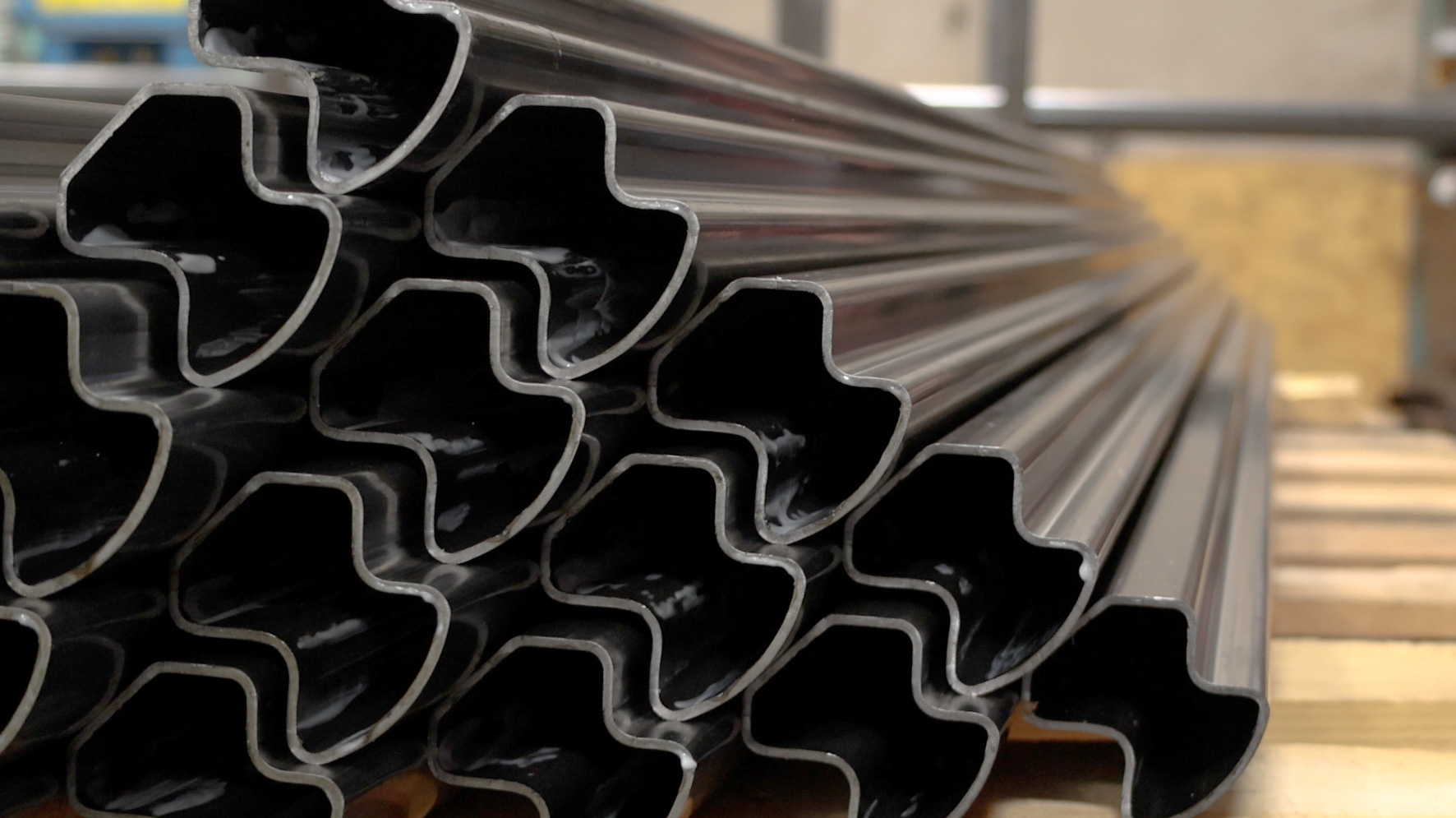
Fraser Steel works with a wide range of ferrous and non-ferrous materials to support OEM metal tube fabrication, from early prototypes to high-volume runs. We regularly fabricate parts that demand tight tolerances, repeatability, and consistent material performance.
If your drawing already specifies a material or ASTM standard, we build to it. If not, our team can help confirm the best material choice based on strength, formability, appearance, and cost.
Size Capabilities

Up to 6 inch outside diameter
Up to 0.250 inch wall thickness
Form Capabilities
Round tubing
Square and rectangular tubing
Angle
Channel
Iron
Carbon Steel Tubing
Carbon steel remains the most common material we process, supporting structural, mechanical, and high-strength applications across multiple industries.
High-Strength Low-Alloy (HSLA)
Used when higher strength is needed without adding unnecessary weight. Common in structural and load-bearing components.
Dual-Phase Steel
An advanced high-strength steel offering excellent strength with good formability and energy absorption. Often used in automotive and safety-critical parts.
Electric Resistance Welded (ERW)
A cost-effective and widely used tubing option for general structural and mechanical applications.
Drawn Over Mandrel (DOM)
Cold-worked tubing with tighter dimensional control and improved mechanical properties compared to standard ERW. Ideal for parts requiring consistency, machinability, or a cleaner finish.
Common specifications referenced
ASTM A513 Mechanical Tubing (Types 1, 2, and 5)
ASTM A500 Structural Tubing
ASTM A1011 Sheet specification referenced on HSLA tubular drawings
ASTM A1088 Sheet specification referenced on dual-phase tubular drawings
Aluminum Tubing & Extrusions
Aluminum is often selected for its strength-to-weight ratio and corrosion resistance. We support both seamless and extruded aluminum tubing used in structural and cosmetic applications.
Typical applications include lightweight frames, formed assemblies, and parts where corrosion resistance is critical.
Common specifications referenced
ASTM B210 Aluminum Seamless Tubing
ASTM B221 Aluminum Extrusions
Stainless Steel Tubing
Stainless steel is commonly used when corrosion resistance, durability, or appearance matters.
300 Series Stainless (Austenitic)
Grades such as 304 and 316. Known for excellent corrosion resistance and clean appearance. Commonly used for exposed or customer-facing components.
400 Series Stainless (Ferritic)
Grades such as 409 and 430. Often selected for functional corrosion resistance and heat-related applications, including exhaust components.
Common specifications referenced
ASTM A554 Stainless Mechanical Tubing (Austenitic)
ASTM A268 Stainless Steel (Ferritic)
Copper Tubing & Components
Copper is used when electrical or thermal conductivity is important, as well as for corrosion resistance in specific environments. We support copper tubing and components used in specialty and industrial applications.
Brass Tubing & Specialty Components
We process brass primarily for smaller production runs or project-specific components. While less common in high-volume production, brass remains a solid choice for parts requiring corrosion resistance, machinability, or visual appeal.
Structural Shapes (Angle, Channel, Iron)
In addition to round and shaped tubing, we also fabricate common structural profiles, including iron, angle, and channel. These materials are often used for frames, supports, and welded assemblies requiring straightforward structural geometry.
Material Selection Support
Not every project starts with a finalized material spec. We regularly help customers evaluate:
- Strength and stiffness requirements
- Bending and forming considerations
- Weldability and machining needs
- Surface finish and appearance expectations
- Material availability and cost at production volumes
Send us a print, CAD file, or sample and we will help confirm the right material and specification before production begins.
Material FAQs
What materials does Fraser Steel work with?
We regularly fabricate carbon steel, aluminum, stainless steel, copper, brass, and common structural shapes such as angle and channel. This includes high-strength steels and specialty alloys used in OEM applications.
Do you work with HSLA and dual-phase steel?
Yes. We regularly process high-strength low-alloy (HSLA) and dual-phase steels for structural and performance-driven parts.
Can you process ERW and DOM tubing?
Yes. We work with both electric resistance welded (ERW) tubing and drawn over mandrel (DOM) tubing, depending on the strength, tolerance, and finish requirements of the part.
What stainless steel grades do you support?
We commonly work with 300 series stainless steels, such as 304 and 316, as well as 400 series stainless steels used in functional and heat-related applications.
Do you build to ASTM specifications?
Yes. We routinely build to customer-specified ASTM standards, including ASTM A513, A500, A554, A268, B210, and B221.
What size tubing can you process?
We support tubing up to 6 inches in outside diameter and up to 0.250 inch wall thickness.
Can you help select the right material if a drawing is not finalized?
Yes. Our engineering team can help evaluate material options based on strength, formability, weldability, appearance, and cost before production begins.
Not sure which material is right for your part?
Upload a print or talk with our team to confirm the best-fit material and specification for your application.